
Programs
Forest
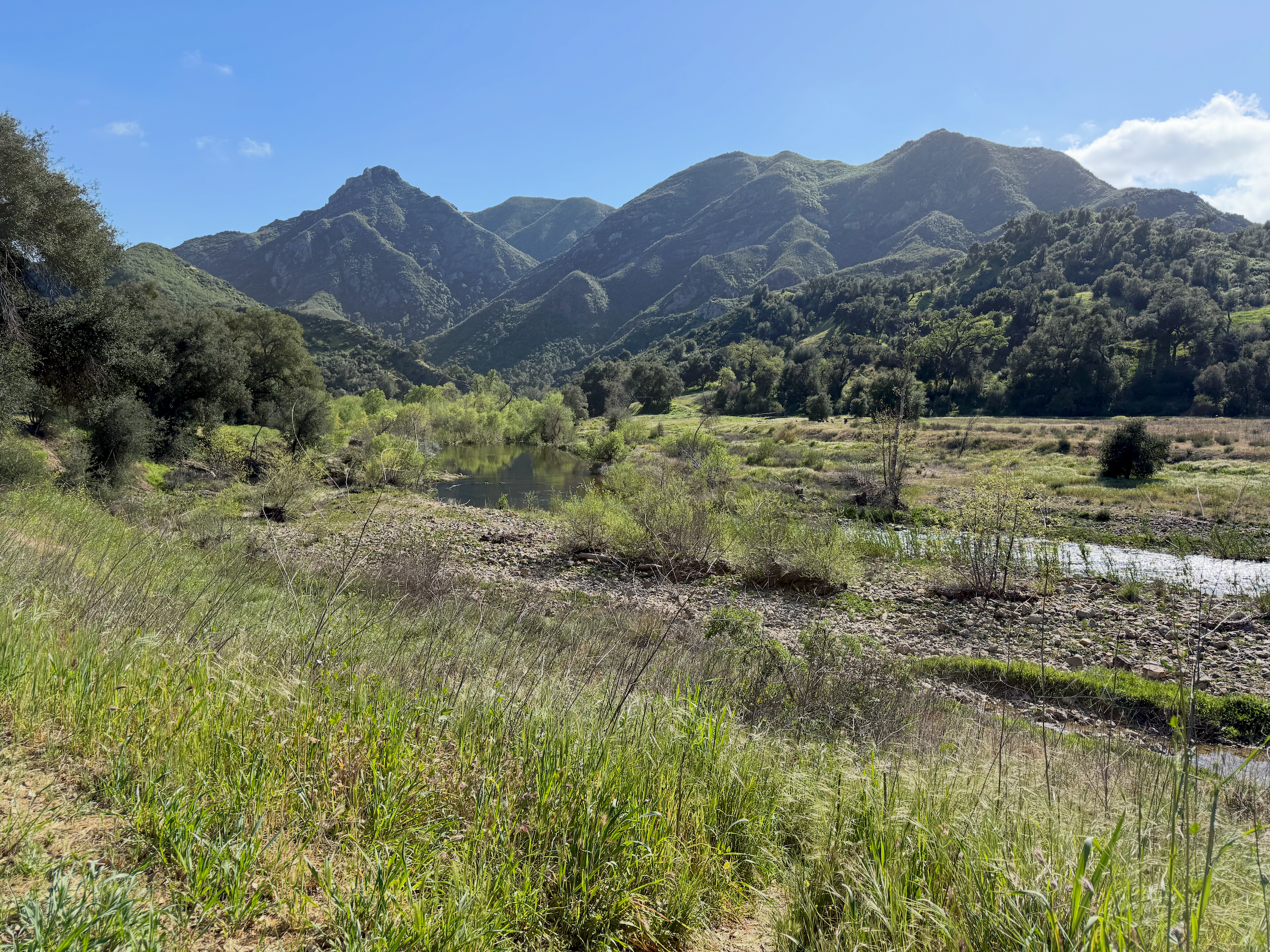
Our forest is the oak woodland of the Santa Monica Mountains — canyons, seasonal creeks, chaparral, rock, and trail. Here, children move through familiar landscapes, build relationships with one another and with place, and learn through the slower rhythms of returning to the same land again and again.
What forest is
Not a curriculum. A landscape.
Forest is a recurring relationship with place. Children return to the same oak woodlands, creek beds, trails, rocks, and gathering spaces often enough for familiarity to become knowledge.
The landscape offers questions, materials, challenges, and change. Children notice what is different, return to unfinished ideas, follow new interests, and build increasingly complex understandings of the places they know.
Adults are part of that learning too — observing, wondering, introducing possibilities, supporting inquiry, and knowing when to step forward and when to leave room. Over time, something accumulates: memory, competence, attachment, confidence, and a sense of belonging to place. The forest becomes not somewhere they visit, but somewhere they know.
WHY IT MATTERS
What unstructured time makes possible
Children need time that is not constantly directed for them. In open-ended outdoor environments, they make decisions, negotiate with other children, tolerate uncertainty, solve problems, move their bodies, follow curiosity, recover from frustration, and discover what holds their attention when no one is assigning the next task.
Research on play, self-directed learning, attention, stress regulation, and children’s relationship with nature helps us understand why these experiences matter. But the value is also visible in the children themselves: in the complexity of their play, the questions they begin to ask, the confidence with which they move through familiar places, and the growing ability to create something together without an adult organizing every step.
At Wild Village, unstructured time does not mean unattended time. Adults remain present and responsive while leaving enough space for children to initiate, experiment, negotiate, and sometimes struggle. That space is not empty. It is where agency begins to grow.

Ready to join the village?
If you are looking for a learning community rooted in nature, relationship, curiosity, and belonging, we would love to hear from you.